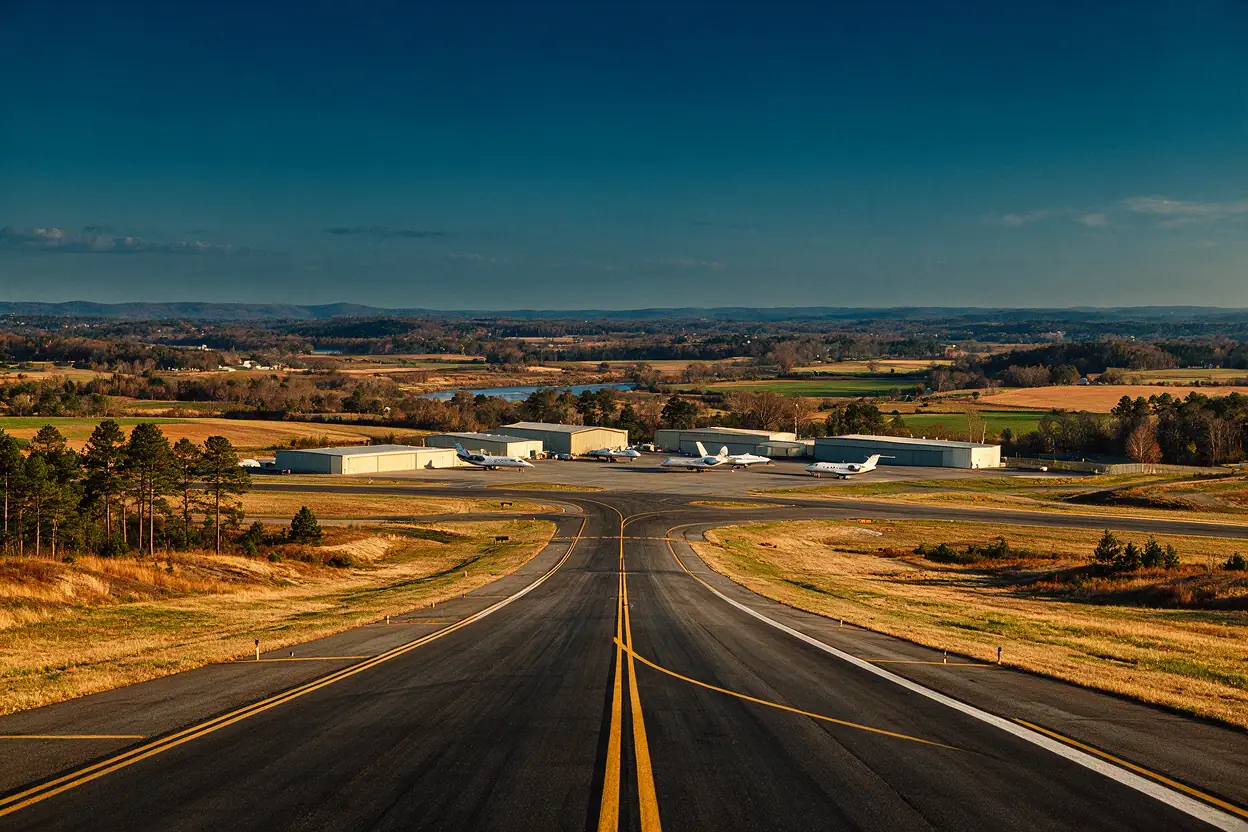
Private plane charter William P. Hobby
Private plane charter William P. Hobby pairs aircraft to a 7,602-foot runway. In July the field's density altitude reaches roughly 2,200 feet. Seats, bags and leg length decide the rest.
- KHOU · HOUairfield codes
- 46 ftfield height
- 7,602 ftlongest strip
- 0 mitoward New York
William P. Hobby Airport sits 46 feet above sea level with a 7,602-foot longest runway, enough for many light and midsize jets at typical loads. A private jet charter at William P. Hobby starts with runway and weight, then price. Because HOU is close to downtown Houston, the field draws business travelers headed to the Texas Medical Center, the Energy Corridor and the Port of Houston. Runway length supports turboprops and light jets comfortably; larger midsize and super-midsize jets also use it but may face weight limits on hot afternoons. The practical question is whether your chosen aircraft can lift the full group and bags from this runway on the day you fly, not simply whether it is based nearby.
Summer heat at William P. Hobby can cut useful load on light jets by a few hundred pounds. Density altitude is the altitude the aircraft feels given temperature, pressure and humidity. At HOU, July's average high of 91 F pushes density altitude to roughly 2,200 feet; a peak day can reach about 2,700 feet. That is mild compared with mountain airports, but it still matters for a full light jet departing on a long leg. Turboprops generally handle the heat well because their wings are optimized for lower speeds, while very light jets may need a fuel stop or a lighter passenger load.
Comparing quotes for a private plane charter William P. Hobby is easier when you start with aircraft categories rather than hourly rates. A light jet typically seats four to seven and suits short regional trips; a midsize jet seats seven to nine and adds cabin comfort and range; a super-midsize or large jet handles transcontinental legs and heavier loads. Prices are estimates and vary with aircraft, date, positioning and crew. Six FBOs on the field mean competition for ground handling, but the aircraft choice drives most of the cost. Ask for the aircraft type, model year and estimated total before you compare the bottom line.
Runway and field elevation at Hobby
William P. Hobby's longest runway measures 7,602 feet, which is enough for most light and midsize jets at normal temperatures. The 7,602-foot runway at William P. Hobby suits turboprops and light jets with margin to spare. Field elevation is just 46 feet, so terrain clearance is rarely the issue; heat and weight are. On a July afternoon with density altitude near 2,200 feet, a fully loaded light jet heading more than about 1,000 nautical miles may need a fuel stop. If your group is large or your bags are heavy, then a midsize jet with more thrust and wing area is the simpler answer. Runway length alone does not guarantee performance; the aircraft flight manual figures for that day's temperature and weight do.
| Runway | Length | Width | Pavement |
|---|---|---|---|
| 04/22 | 7,602 ft | 150 ft | Concrete |
| 13R/31L | 7,602 ft | 150 ft | Asphalt |
| 13L/31R | 5,148 ft | 100 ft | Concrete |
Ground access at Hobby
William P. Hobby Airport is about seven miles southeast of downtown Houston, reachable via Interstate 45 and the 610 Loop. A private plane charter William P. Hobby arrival puts you minutes from downtown Houston via Interstate 45. The Galleria, the Museum District and the Port of Houston are all within a reasonable drive, though traffic on the downtown interchanges can add time at rush hour. If you are heading to Galveston or the bay, then the route via Interstate 45 South is direct. For international legs, CBP clearance may be arranged at a nearby port of entry; confirm that detail in your quote before you book.
Private jet routes via William P. Hobby
These 6 private jet routes span 199 to 2,129 nautical miles, and one-way light jet estimates run from $4,000 to $36,000.


FBOs serving Hobby charters
Six FBOs operate at William P. Hobby: Wilson Air Center, Million Air Houston, Jet Aviation Houston, Atlantic Aviation, Signature Aviation and Henriksen Jet Center. Six FBOs at William P. Hobby give charter flights several ground-handling options. That matters when one ramp is busy or when your aircraft type is better served at a particular facility. Each FBO has its own lobby, crew area and fuel arrangements; your quote should state which one is planned. If your schedule is tight, then ask which FBO minimizes taxi time to your departure runway.
Ground handling at HOU is generally efficient because the airport shares space with commercial traffic, but peak business hours can stack arrivals. Knowing which FBO your William P. Hobby charter uses helps you plan the drive and the departure. The airport sits close to Interstate 45 and the 610 Loop, so many passengers reach the ramp within a short drive from downtown or the Galleria. If you are connecting to a commercial flight at HOU, then allow extra time for the terminal transfer and TSA screening if you leave the general aviation side.
Aircraft and trips for Hobby
- Business travel to downtown Houston, the Texas Medical Center and the Energy Corridor, all a short drive from the field.
- Light jet and turboprop trips across Texas and the Gulf Coast, where the 7,602-foot runway gives comfortable margins.
- Groups of six to nine flying to Dallas, Austin, San Antonio or New Orleans in midsize jets.
- Winter and spring departures when density altitude is near 300 to 600 feet and light jets perform at full load.
| Cabin size | Runway requirement | Local |
|---|---|---|
| Turboprop | 3,300 ft+ | No limits |
| Light jet | 4,000 ft+ | No limits |
| Midsize jet | 5,000 ft+ | No limits |
| Super-midsize jet | 5,200 ft+ | No limits |
| Heavy jet | 5,600 ft+ | No limits |
Hobby density altitude by season
Density altitude at William P. Hobby ranges from about 300 feet in January to roughly 2,200 feet in July and August. In July and August, William P. Hobby's density altitude averages about 2,200 feet with highs near 91 F. The peak figure reaches about 2,700 feet on the hottest afternoons. That is not extreme, but it affects light jets more than turboprops. If you are flying a very light jet with four passengers and full bags on a hot afternoon, then expect a performance penalty that may require a fuel stop or a lighter load. The same aircraft on a January morning faces density altitude near 300 feet and performs at its book numbers.
Wet days add humidity, which raises density altitude further. May through September brings 15 to 17 wet days a month, so afternoon thunderstorms are a routine planning factor. Afternoon storms at William P. Hobby are common from May through September, with 15 to 17 wet days a month. If your departure is scheduled for late afternoon in summer, then an earlier morning slot often avoids both the heat penalty and convective delays. Morning temperatures in the high 60s to mid 70s keep density altitude well below 1,000 feet in spring and fall.
| Period | Mean high | Days with rain | Density altitude |
|---|---|---|---|
| Jan | 63°F | 11 | 300 ft |
| Feb | 67°F | 13 | 600 ft |
| Mar | 73°F | 13 | 1,000 ft |
| Apr | 78°F | 15 | 1,300 ft |
| May | 84°F | 16 | 1,700 ft |
| Jun | 89°F | 16 | 2,100 ft |
| Jul | 91°F | 16 | 2,200 ft |
| Aug | 91°F | 17 | 2,200 ft |
| Sep | 87°F | 15 | 1,900 ft |
| Oct | 81°F | 10 | 1,500 ft |
| Nov | 72°F | 11 | 900 ft |
| Dec | 67°F | 11 | 600 ft |
FAQs on this airfield
What runway length does private plane charter William P. Hobby offer?
William P. Hobby has a longest runway of 7,602 feet with a field elevation of 46 feet. That length is enough for most light and midsize jets at normal temperatures. On hot July afternoons, density altitude near 2,200 feet reduces performance, so a fully loaded light jet on a long leg may need a fuel stop. Turboprops generally handle the conditions with fewer restrictions.
How hot does it get and what is the density altitude at William P. Hobby in summer?
July and August average highs near 91 F, which produces a density altitude of about 2,200 feet. Peak afternoons can reach about 2,700 feet. That is mild compared with mountain airports, but it still trims payload on light jets. January density altitude is around 300 feet, so winter departures see far less penalty. Planning an early morning departure in summer usually avoids the worst heat.
Which FBOs serve private plane charter William P. Hobby flights?
Six FBOs operate at HOU: Wilson Air Center, Million Air Houston, Jet Aviation Houston, Atlantic Aviation, Signature Aviation and Henriksen Jet Center. Each has its own ramp, lobby and crew facilities. Your quote should name the FBO planned for your flight. If your schedule is tight, ask which facility keeps taxi time shortest to your departure runway.
What aircraft types work best for a private plane charter William P. Hobby trip?
Light jets seating four to seven suit short regional trips, while midsize jets seating seven to nine add range and cabin comfort. Turboprops are a good fit for shorter legs and hot-day performance because they are less sensitive to density altitude than very light jets. For transcontinental legs, a super-midsize or large jet is the practical choice. Ask for the specific aircraft type and model year in each quote.
How far is William P. Hobby Airport from downtown Houston?
The airport is about seven miles southeast of downtown Houston, reached via Interstate 45 and the 610 Loop. Drive time varies with traffic, and the downtown interchanges can be slow at rush hour. The Galleria and Museum District are also within a reasonable drive. If you are continuing to Galveston, Interstate 45 South runs directly to the bay.
Are prices for private plane charter William P. Hobby fixed?
No. Prices are estimates and vary with aircraft type, date, positioning, crew and ground handling. A light jet on a short Texas leg costs less than a midsize jet on a longer trip, but the exact figure depends on the day's availability. Ask for a quote that lists the aircraft, the FBO and the total estimated cost. Compare at least two aircraft categories before you decide.